> For the complete documentation index, see [llms.txt](https://docs.getdor.com/dtm-docs/llms.txt). Markdown versions of documentation pages are available by appending `.md` to page URLs; this page is available as [Markdown](https://docs.getdor.com/dtm-docs/dtm-app/features/analytics-dashboard/dashboard-walkthrough.md).
# Dashboard walkthrough
### Dashboard Overview
The Dor Dashboard is designed for ease of access and in-depth analysis of business data. It allows for various ways to explore and interpret data relevant to business operations.
### Navigating Locations
Explore data differently: view all locations collectively, focus on subsets using location tags, or drill down into specific location details.
### POS Integration
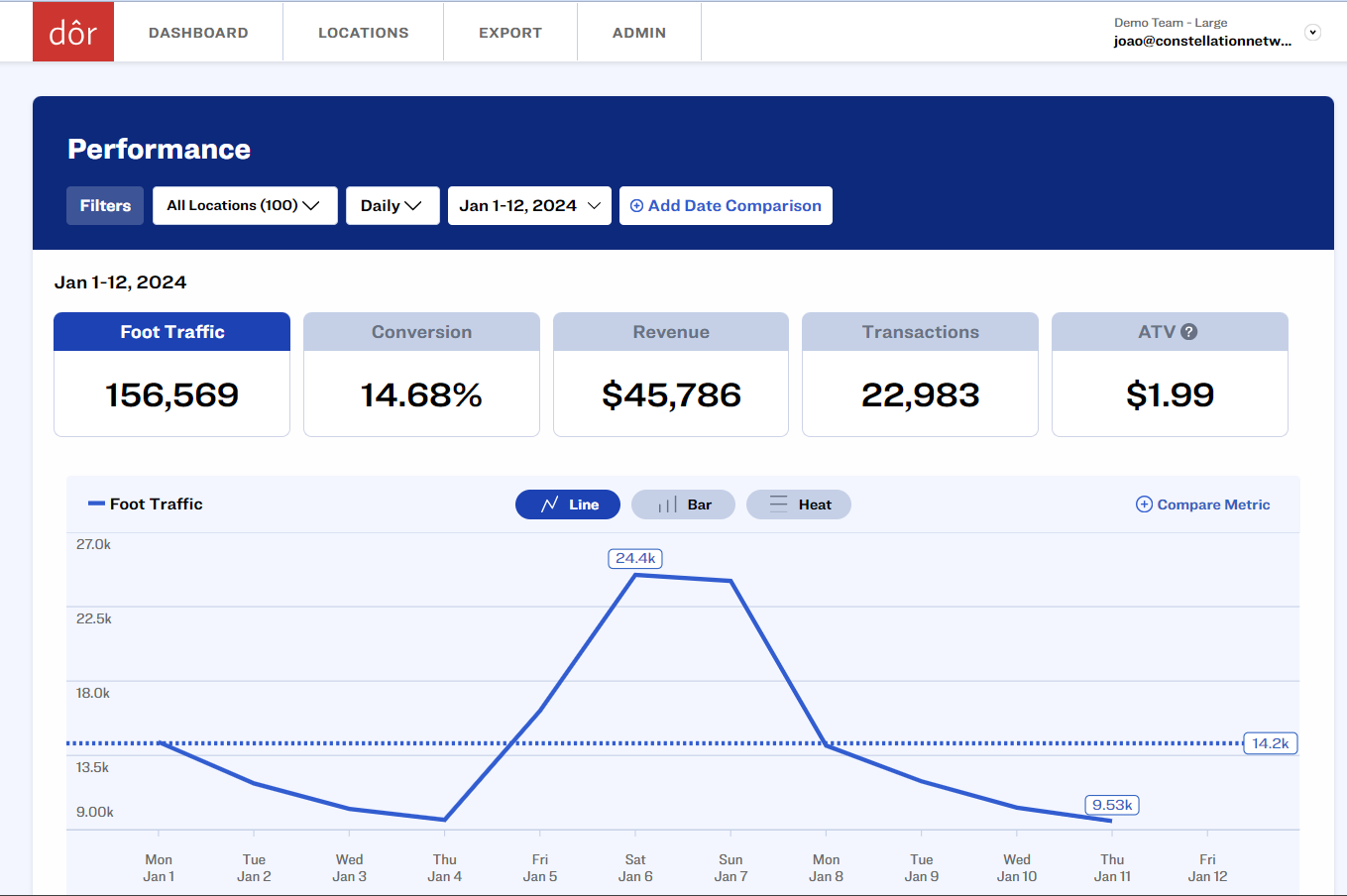
The dashboard offers insights into foot traffic, conversion rates, revenue, transaction numbers, and average transaction values. Integration with POS systems like Shopify, Square, and Lightspeed Retail is available.
### Time Intervals
The platform allows data aggregation in multiple time formats - hourly, daily, weekly, or monthly. This flexibility facilitates in-depth analysis over custom-defined periods.
### Date Range Customization
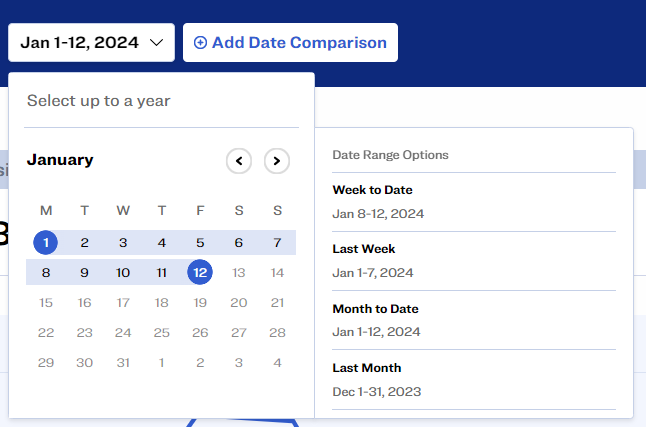
Tailor your data analysis with a customizable date range selector. Pre-set options are also available for frequently used time periods.
### Date Comparison
Engage in comparative analysis, like year-over-year, to identify trends and shifts in key metrics such as foot traffic and conversion rates.
### High-Level Metrics Overview
Quickly gauge business performance through a snapshot of vital metrics, observing trends and significant changes.
### Location-Specific Insights and Weather Data
Dive deeper into specific locations, examining detailed insights and considering external factors like weather.
### Heat Map and Staffing Insights
Use the heat map to visually represent foot traffic patterns, assisting in staffing decisions based on traffic trends.
### Metrics Comparison
Contrast metrics such as foot traffic against conversion rates to unravel complex business performance patterns.
### Location Ranking and Comparison
Evaluate and compare locations based on various metrics, including year-over-year changes, to pinpoint areas of success or improvement.
### Data Export Functionality
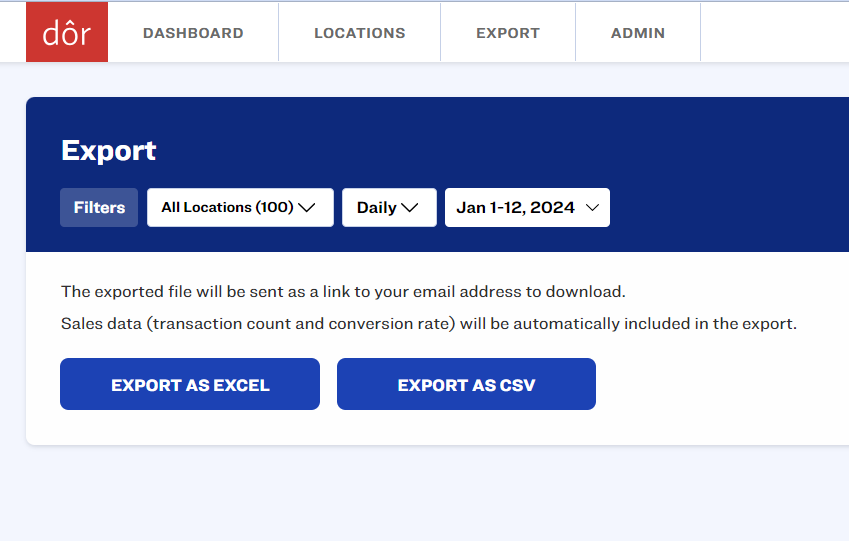
Effortlessly export data for external analysis or reporting, enhancing the usability of the gathered information.
### Tag Management
Create and manage tags to group and analyze subsets of locations, offering a streamlined view of specific segments.
### Admin and User Management
The dashboard supports different user roles like team admins, admins, managers, and staff, each with specific access and capabilities. This feature helps in managing access and responsibilities within the organization.
For in-depth information on the analytics dashboard, please refer to the description and video in the link below:
{% embed url="" %}